
Identification of Conserved Antiviral and Vaccine Targets Through Evolutionary and Structural Analysis of PB1 and PB2 Subunits of Influenza A Virus
The influenza genome is transcribed and replicated by an RNA polymerase complex. This complex consists of PB1 and PB2 subunits, playing a critical role in viral RNA synthesis and interaction with host cell proteins. The PB1 subunit forms the catalytic center of chain elongation, while the PB2 subunit recognizes the 5′ cap structures of host mRNAs, enabling their cleavage via PA and their use as primers for synthesis. Therefore, molecular-level analysis of the RNA polymerase complex is crucial for understanding the virus’s replication mechanism. The conserved structural regions of PB1 and PB2, along with their interactions with host proteins, make these subunits priority targets for both antiviral drug and vaccine development. Current studies indicate that PB1 and PB2 subunits contain binding sites that can be evaluated for vaccine and small molecule drug development. However, comprehensive bioinformatic analyses of the evolutionary conservation levels and selection pressures of target regions of PB1 and PB2 have not yet been conducted. This project aims to perform a long-term evolutionary mapping, which is lacking in the literature, by analyzing the variation dynamics, selection pressures, and structural conservation patterns of the PB1 and PB2 genes between 2009 and 2025.
This project is conducted by Helen Üce and Fatma Sevil Demirdağ, and supported by TUBİTAK 2209.
Bioinformatics and molecular evolutionary analyses of inter-subunit interactions in the polymerase complex of Influenza A virus for identification of more effective antiviral drug and vaccine targets
Influenza A remains a major cause of the respiratory disease in humans and animals due to its high mutation rate and ability to cross species barriers. The genome of the Influenza A virus consists of negative-sense single-stranded RNA, which must first be transcribed into viral mRNA by the viral RNA-dependent RNA polymerase (RdRp) complex to produce viral proteins and replicate the viral genome. The Influenza virus polymerase is a heterotrimeric complex, composed of 3 main segments; PB1, PB2 and PA. Influenza viral mRNAs lack a 5′ cap, therefore the virus hijacks capped host pre-mRNAs through a mechanism called cap-snatching. This polymerase complex functions through highly coordinated interactions, where PB2 binds the 5′ capped host RNA, PA cleaves it via its endonuclease activity, and PB1 uses the capped fragment to synthesize viral mRNA. Bioinformatics and molecular evolutionary analyses of these subunits and their inter-subunit interactions are essential for understanding how adaptive mutation, reassortment events, and evolutionary pressures shape polymerase functionality and viral fitness. Identifying evolutionarily constrained regions may provide more stable antiviral drug and vaccine targets with lower susceptibility to antigenic drift and resistance development. Therefore, integrating molecular evolution, phylogenetics, and bioinformatics approaches can contribute to the discovery of novel therapeutic strategies targeting highly conserved functional domains of the influenza A virus polymerase complex. Recent studies have increasingly focused on the influenza A virus polymerase complex, as it represents a highly conserved yet functionally essential component of the viral replication machinery. In this context, the aim of this project is to investigate the evolutionary dynamics of the polymerase complex between 2009 and 2025, and to contribute to the identification of suitable and conserved vaccine targets based on the observed evolutionary patterns.
This project is led by MSc stıudent Ayşegül Karadeniz.
Molecular Evolutionary and Population Genetics Analyses Of Human H1N1pdm09 HA and NA Genes In Pandemic And Non-Pandemic Years
Hemagglutinin (HA) protein plays a crucial part in enabling the virus to enter host cells by facilitating its attachment to the cell surface. This specific role makes it an attractive target for investigations aimed at developing antiviral treatments and vaccines, as blocking HA’s action could hinder the infection process. The neuraminidase (NA) protein is vital for the release of newly formed viral particles from infected cells, aiding the virus in spreading throughout the respiratory tract. There are studies that are trying to develop antiviral drugs that are targeted at inhibiting NA’s functions to limit viral replication. Studying the molecular evolution of 2009 pandemic H1N1 influenza viral sequences can give valuable information about the types of selection acting on the hemagglutinin and neuraminidase proteins of the virus. These findings can be used to identify the most conserved and fastest evolving parts of these proteins that can be utilized for better vaccine and drug (small molecule) development and monitor global viral dynamics.
This project is led by PhD student Kıvanç Naycı.
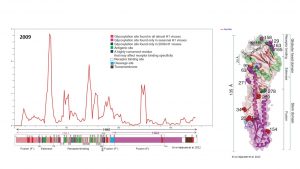
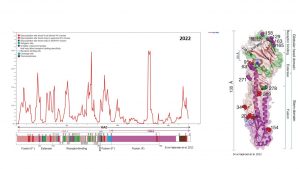
Sliding window comparison of amino acid fixations normalized by synonymous site fixations along the HA gene between 2009 (pandemic year) and 2022 (non-pandemic year)